Uncategorized

Marcel Hugg Riesling & Pinot Gris [wine review]

Among the wines in the 2026 SuperValu French Wine Sale there are, as in previous years, three from Alsace. One is the excellent Arthur Metz 1904 Crémant d’Alsace, but also a pair of whites from Marcel Hugg that I am tasting for the first time.

Maison Marcel Hugg

The Hugg family can trace their roots back to 1606. Based in Bergheim on the route du Vin, they follow traditional practices unless a more modern technique can improve the quality of the wine, e.g. pneumatic presses and temperature controlled fermentation.

Like many in Alsace they make wines from lots of different varieties:

  • Sylvaner
  • Pinot Gris
  • Pinot Blanc
  • Gewurztraminer
  • Muscat d’Alsace
  • Pinot Noir
  • Riesling

They also make some of the specialities of the area:

  • Crémant d’Alsace
  • Vendanges Tardives (late harvest sweet wine)
  • Sélection de Grains Nobles (noble rot sweet wine
  • Riesling Altenberg de Bergheim Grand Cru

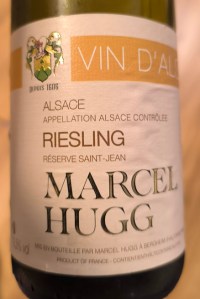
Marcel Hugg Alsace Riesling “Réserve Saint-Jean” 2025

Image of wine bottle (Marcel Hugg Alsace Riesling)

In the glass this wine is so pale that, in the right glass, from a distance it might pass for water. The nose is very citrus – lemon and lime – with floral notes in the background.

The palate is racy, fruity yet chalky. There’s lots of citrus and a pleasing minerality.

This is textbook Alsace Riesling that deserves a try, especially for newcomers to the category.

  • ABV: 12.5%
  • RRP: €12 (guest wine)
  • Source: sample
  • Stockists: SuperValu stores

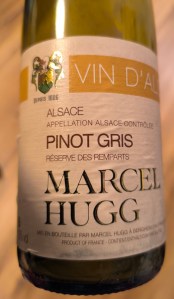
Marcel Hugg Alsace Pinot Gris “Réserve des Remparts” 2024

Image of wine bottle (Marcel Hugg Alsace Pinot Gris)

When poured it has a little more colour than the Riesling, and more than a typical Italian Pinot Grigio. On the nose there are a variety of pip and stone fruits, tinted by hints of ginger and exotic spices.

Those fruits and spices follow through on the palate which is perfectly noised between linear and round. This Pinot Gris is mid weight and only just more than bone dry. It might even convert a few “Pinot Grigio” fans – here’s hoping!

A delicious wine at a great price.

  • ABV: 13.0%
  • RRP: €12 (guest wine)
  • Source: sample
  • Stockists: SuperValu stores
Wine reviews

Sophie Schaal Alsace Riesling [wine review]

Sophie Schaal

Sophie Schaal’s wines are a recent addition to the O’Briens Wine portfolio, and as this Riesling is included in the 2026 Annual Wine Sale I jumped at the chance to try it.

Despite the Germanic-sounding surname, Sophie is actually from Burgundy. After five years of oenology studies in Burgundy, Sophie and her shiny new Oenology certificate moved to South Africa. Among the amazing scenery and vineyards she met her now husband Julien Schaal from Alsace.

The couple now make wine in both Alsace and South Africa; Sophie focuses on AOC Alsace and WO Swartland, whereas Julien’s wines are from various Alsace Grands Crus and WOs Elgin, Walker Bay and Hemel-en-Aarde Ridge. Their joint winery in Alsace is in the village of Hunawihr, on the Route des Vins between the better known villages of Riquewihr and Ribeauvillé.

Sophie Schaal Alsace Riesling 2025

Image of wine bottle (sophie Schaal Alsace Riesling)

The vines for this wine are on clay-limestone soils, giving the wines structure and minerality without austerity. Sophie believes in sustainability and follows organic viticulture practices, with no pesticides or synthetic chemicals being used.

The grapes are hand picked and whole-bunch pressed. After being gently pressed, the juice is transferred to tanks for a long, cool fermentation which preserves as many aromatics as possible.

In the glass this is a very light straw colour, typical for dry Riesling. The nose is full of ripe citrus and granny smith apple notes, along with hints of honey.

On the palate those citrus notes expand and make themselves at home – we’re talking lemon, lime and quince. The wine is fresh but juicy, plump but not opulent, mouth-watering but not sharp.

For a young Riesling this is very approachable and very pleasurable, and I highly recommend it.

ABV: 12.0%
RRP: €21.99 down to €19.49
Source: sample
Stockists: O’Briens stores and obrienswine.ie


Producer profiles

Producer Profile: Rolly Gassmann

Rolly Gassmann is an excellent producer of Alsace wines, based in the village of Rorschwihr. To give the wines the context they deserve, first we will look at Rorschwihr itself, then the background to Rolly Gassmann and their wine philosophies, before exploring some of the wines available here in Ireland.

Rorschwihr

Rorschwihr is at the top of the Haut-Rhin department close to the border with the Bas-Rhin. Unsurpringingly given its location, it has a long history of winemaking and has been associated with lots of important historical figures. The Merovingians, Carolingians and Hapsburgs have had their stints as vineyard owners here. A long list of religious orders and Popes have also owned land in the village. Unusually for Alsatian wine villages, each major wine family owned and operated their own press rather than relying on a communal one.

Even within Alsace which is famed for the diversity of its soils, Rorschwihr’s terroirs are particularly complex. It lies on the Ribeauvillé fault line which runs north-south, inbetween the Vosges and Rhine fault lines, and so has over 20 identifiably different soil types. When the Alsatian wine authorities were looking to establish Grand Crus in the area, they sought to combine several areas which were already recognised as distinct by the locals, who decided that either 12 climats were worthy of Grand Cru status or none at all. Those climats are today among the named lieux-dits of Rorschwihr and are candidates for future Alsace 1er Cru status.

Rolly Gassmann

The list of double-barrelled surnames on this website will continue to grow – Kuentz-Bas was the first with Sipp Mack and Meyer-Fonné in the pipeline. Both the Rolly and Gassmann families had centuries of winemaking behind them when a branch of each were joined through marriage in 1967. Pierre Gassmann is the current proprietor and is the son of the founding pair.

The domaine has a total of 52 hectares under vine, 40 of which are in Rorschwihr and 10 a few clicks to the south in Bergheim. Rolly Gassmann has holdings in many of the lieux-dits referred to above:

Altenberg de Bergheim Kappelweg de Rorschwihr Oberer Weingarten de Rorschwihr Silberberg de Rorschwihr
Brandhurst de Bergheim Kugelberg de Rorschwihr Pflaenzerreben de Rorschwihr Stegreben de Rorschwihr
Haguenau de Bergheim Lachreben de Rorschwihr Rotleibel de Rorschwihr Steinkesselreben de Rorschwihr
Grasberg de Rorschwihr Moenchreben de Rorschwihr Pflaenzerreben de Rorschwihr Weingarten de Rorschwihr

Each of the lieux-dits has different terroir and so is best suited to different varieties. Here are further details of three of them whose wines make it to Ireland:

Keppelweg de Rorschwihr (Way of the Chapel) covers 5.67 hectares at 225 to 235 masl (it is part of a plateau). Its soils are a mixture of clay, marl and loam with lots of stones, dating back to 1.6m – 2.0m years ago. The aspect is south and south-east. Riesling and Gewurztraminer fare best here.

Brandhurst de Bergheim (Burning Bush) has heavy marl soils arranged in a semi circle between 250 and 300 masl with a south and south-east aspect. It is in a well-sheltered location and never lacks for water. The soils are fairly fertile and retain heat which makes them good for noble rot. The varieties planted are 60% Gewurztraminer, 15% each of Pinot Gris and Riesling and the remaining 10% made up of Muscat, Auxerrois, Pinot Noir and Sylvaner.

Oberer Weingarten de Rorschwihr (Upper Wine Garden) has clay and silt soils with siliceous pebbles and limestones, all dating back to 0.8m years ago. Its 6 hectares are mainly planted to Gewurztraminer and Riesling at 225 to 260 masl.

RG wines which do not state a lieu-dit are either from outside those delimited vineyards or are made from grapes harvested from several lieux-dits blended together.

Rolly Gassmann Wine Styles and Philosophy

Pierre Gassmann has taken the wines down the organic and biodynamic paths, but the domain is certified for neither; these approaches to viticulture are followed for their own good rather than as a selling point on a label. Rolly Gassmann also follows sustainable principles and its wines are vegan-friendly.

In the vineyard, harvest takes place when the wines are fully ripe, even with some botrytis, so that sugar levels are high and flavours are concentrated. Integrating them takes time, and the wines are aged in Rolly Gassmann’s spectacular new winery until they are ready to drink. Known locally as La Cathédrale, the facility has six floors built into the hillside and uses gravity to move grapes, must and wines from one stage of the process to the next. It also has considerable storage, with up to a million and a half bottles laid down, equating to five years’ production.

The finished wines generally have more residual sugar than is the norm in Alsace, but they can cellar for much longer, even given the extra pre-release ageing. Additional ageing lessens the apparent sweetness of wines over time, though my understanding is that this is due to the evolution of flavours rather than any change in actual sugar content.

Now we move onto notes from some of the wines available in Ireland:

Domaine Rolly Gassmann Sylvaner Réserve Millésime 2017
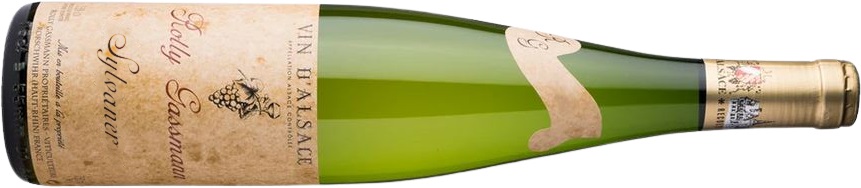
Rolly Gassmann Sylvaner Réserve Millésime

According to Monty Python, nobody expects the Spanish Inquisition, but neither do they expect sweentness in Sylvaner. Long relegated to an also-ran, this grape variety can really shine given a chance. Its deep lemon colour gives a heads up on the palate sweetness. The nose is full of luxurious ripe peach, apricot, nectarine and three fruits marmalade. On the attack, it initially tastes quite dry, mineral and tangy – what you might expect from a typical Sylvaner. In the mid palate the baton is passed back to the rich stone fruits which usher it to the finish.

This is not a typical Sylvaner, but it’s all the better for its unique, glorious style.

  • ABV: 12.0%
  • RS: 29 g/L
  • RRP: €25.99
  • Stockists: Baggot Street Wines; Blackrock Cellar; Michaels at Higgins Butchers Sutton; Redmonds of Ranelagh; wineonline.ie
  • Source: sample

Domaine Rolly Gassmann Riesling 2019
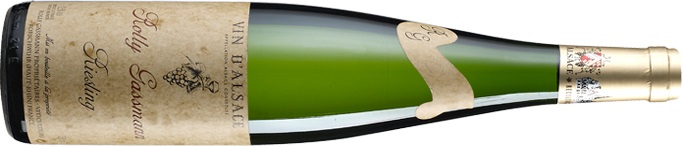
Rolly Gassmann Riesling

The grapes for this “entry level” Riesling are gently pressed for eight to twelve hours then fermented for four to five months with indigenous yeasts. Maturation is on fine lees for another six or seven months before bottling. It has a touch of colour in the glass, unusual for a grape which often produces water-clear wines. The nose has citrus fruits and white flower blossom, perhaps a touch of honey. The palate is perfectly balanced, with fine acidity matched to a small amount of sweetness. There’s a light smokiness which actually reminded me of some old vine Sylvaners that I have tried. This is a complex wine for such a relative youngster.

  • ABV: 13.5%
  • RS: 13 g/L
  • RRP: €28.99
  • Stockists: Avoca Handweavers Shops; Baggot Street Wines; Blackrock Cellar; Michaels at Higgins Butchers Sutton; Redmonds of Ranelagh; The Malt House; wineonline.ie
  • Source: purchased from Baggot Street Wines

Domaine Rolly Gassmann Kappelweg de Rorschwihr Riesling 2014
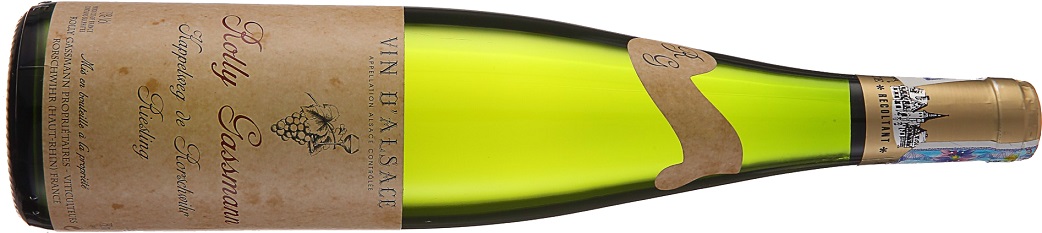
Rolly Gassmann Kappelweg de Rorschwihr Riesling

For those not that familiar with Alsace it might seem strange that an upmarket Riesling (this one) might have more residual sugar the the standard Riesling (above), but it all makes sense in context. Firstly, the better sites get more sunshine so there are likely to be higher sugar levels at harvest time. With longer time in the press and longer fermentation time, this lieu-dit Riesling has more texture and body, so the residual sugar complements that perfectly. Also, the much longer time before release allows all the components to integrate in a melifluous manner.

Rolly Gassmann own 5.67 hectares of the lieu-dit Kappelweg de Rorschwihr from which they currently have three wines available (in France); this 2014 Riesling, a 2019 Gewurztraminer (not the wine below) and a Vendanges Tardives Riesling from 2005! This Riesling is superb, a fine mosaic of different citrus fruits, floral notes and ripe stone fruits. Rorschwihr might not have any Grand Cru classified vineyards but this is certainly of Grand Cru quality.

  • ABV: 13.0%.
  • RS: 26 g/L
  • RRP: €45.99
  • Stockists: Baggot Street Wines; Blackrock Cellar; Michaels at Higgins Butchers Sutton; Redmonds of Ranelagh; wineonline.ie
  • Source: sample

Domaine Rolly Gassmann Brandhurst de Bergheim Pinot Gris 2013
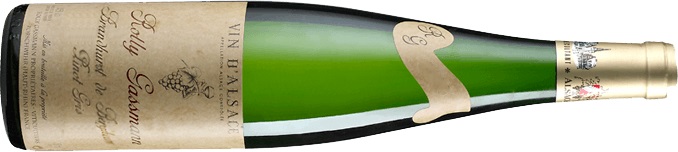
Rolly Gassmann Brandhurst de Bergheim Pinot Gris

The Full Monty. The Whole Shebang. The Whole Nine Yards. Pear Cider That’s Made From 100% Pears. There are many colloquial phrases which imply that something is an archetype, the best of its kind. To that I would like to add Domaine Rolly Gassmann Brandhurst de Bergheim Pinot Gris…do you think it will catch on?

In the glass it’s a light gold, a combination of sweetness and age adding to the depth of colour. The nose has exhuberant notes of red apple, conference pears, poached apricots and even toffee. It’s just delightful in the mouth, with Pinot Gris’s textured dry notes surrounded by sumptuous fruit.

This wine shows why Pinot Gris is (narrowly) my second favourite variety in Alsace. Pinot Gris done right!

  • ABV: 14.0%
  • RS: 42 g/L
  • RRP: €41.99
  • Stockists: Baggot Street Wines; Blackrock Cellar; Michaels at Higgins Butchers Sutton; Redmonds of Ranelagh; wineonline.ie
  • Source: sample

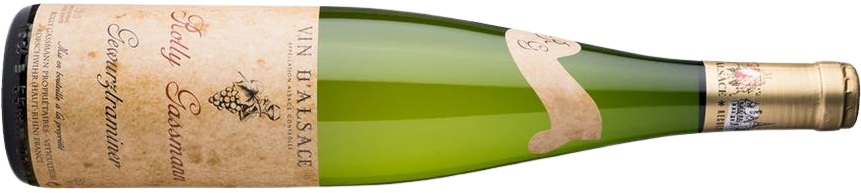
Domaine Rolly Gassmann Gewurztraminer 2016
Rolly Gassmann Gewurztraminer

As I state frequently in my prose, Gewurztraminer is a tricky grape to get right, even in its spiritual home of Alsace. This is the Goldilocks of Gewurz, not too dry, not too sweet, just perfectly poised and balanced. It’s an expressive wine, but not one that gets carried away with itself. The unmistakeable Gewurz nose is exotic without being redolent of fake perfumes from a market stall. The palate has delicious stone and pip fruits – apricot, quince and peach – with ginger and other spices. Rolly Gassmann has made Goldilocks’ perfect wine: graceful, balanced, not trying too hard nor trying to be anything else.

  • ABV: 13.5%
  • RS: 30 g/L
  • RRP: €35.99
  • Stockists: Baggot Street Wines; Blackrock Cellar; Michaels at Higgins Butchers Sutton; Redmonds of Ranelagh; wineonline.ie
  • Source: purchased from Baggot Street Wines

Other Domaine Rolly Gassmann Wines available in Ireland

In addition to the five “regular” wines reviewed above there are two further Rolly-Gassmann wines available in Ireland, both sweet styles:

  • Riesling de Rorschwihr `Cuvée Yves` Vendanges Tardives 2010: RRP €59.99, Stockists: Barnhill Stores, Dalkey; The Corkscrew; Jus De Vine, Portmarnock
  • Oberer Weingarten de Rorschwihr Gewürztraminer Vendanges Tardives: RRP €67.99, currently no retail stockists, but available in some restaurants
Wine reviews

Wine Review: Gustave Lorentz Alsace Grand Cru Riesling

Before we get to the wine itself, with probably the longest name I’ve ever included (see below), let us first have a quick glance at the Alsace Grand Cru vineyard it comes from – Altenberg de Bergheim – and its producer – Gustave Lorentz.

Altenberg de Bergheim

Somewhat confusingly, three of Alsace’s fifty one Grands Crus are named “Altenberg”, but it makes more sense when you realise that the name means “Old Mountain”, and so could easily be applied to several places in Alsace. Confusion is reduced by adding the name of the commune in which the vineyard is located, hence Altenberg de Bergbieten, de Bergheim, and de Wolxheim. The first and last of these are villages in the north of Alsace, 30 to 40 km due west of Strasbourg. Bergheim is in the heart of the Alsace vignoble, just north of Ribeauvillé, and its Altenberg has been renowned for its wines since the 12th century.

This Grand Cru totals 35.06 hectares and lies between 220 and 320 metres above sea level. The soil is a rocky, fossil-laden mix of marl and limestone from the middle and lower Jurassic period. The aspect is due south, with a small stream at the bottom of the slope which slightly tempers the microclimate. All this adds up to wines which are very concentrated and mineral, often a little closed in their youth, but which reward cellaring for five years up to several decades. Riesling and Gewurztraminer are the stars here.

Gustave Lorentz

The Lorentz family count three dates as important milestones for their winery: 1650, when the first ancestor moved to Alsace, 1748 when the family moved to Bergeim, and 1836 when they began producing their own wine.

Their Réserve range is popular in Ireland and widely available. I’ve enjoyed several vintages of their Réserve Riesling and Réserve Pinot Blanc, plus their L’Ami des Crustacés blend is well worth a try. Their full range is summarised in the appendix to my review of their Pinot Blanc mentioned above, but the jewel in the Lorentz crown is undoubtedly their holdings in Altenberg de Bergheim, planted to Riesling and Gewurz. In fact, with 12.77 hectares they account for just over a third of the whole Grand Cru.

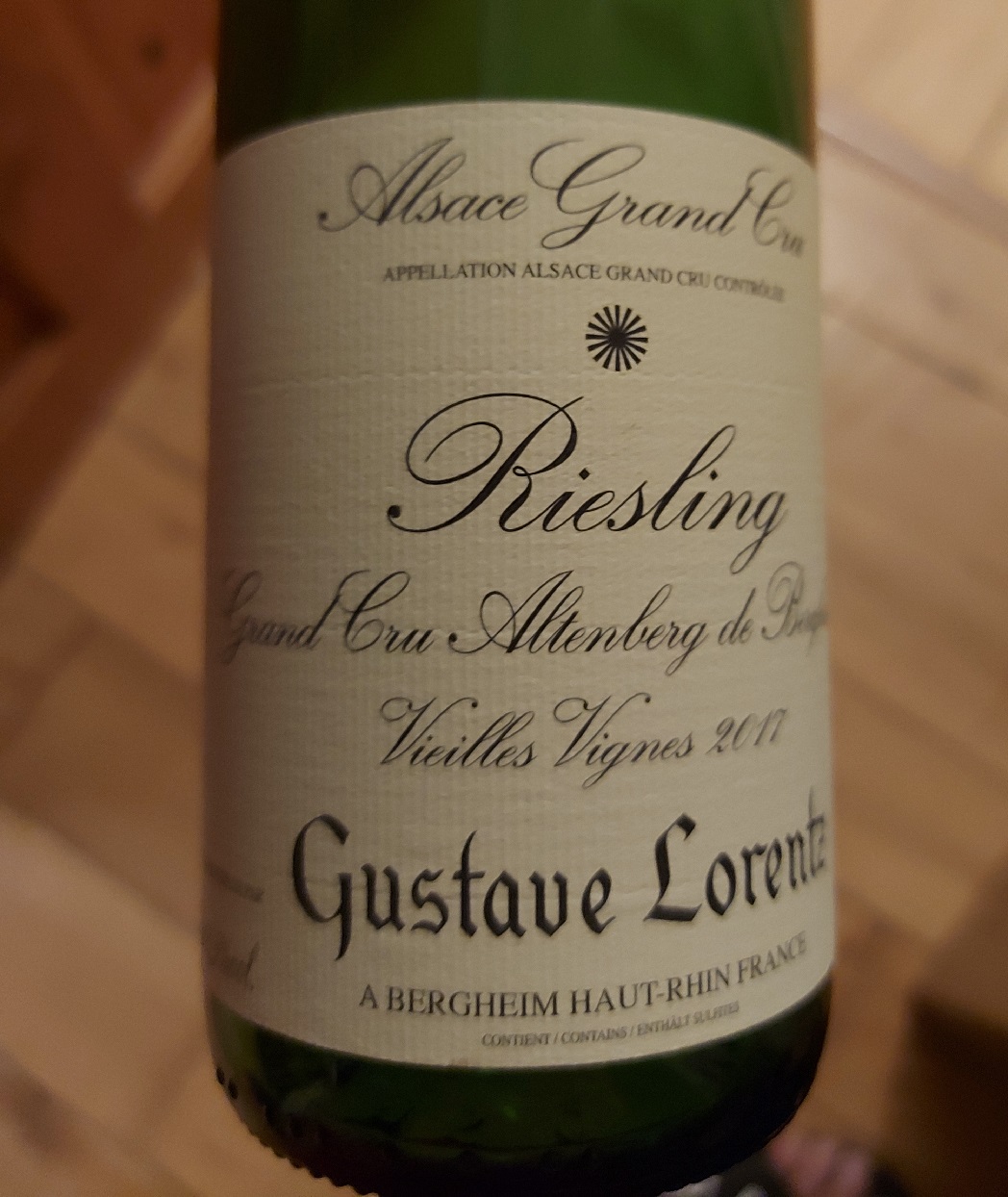
Gustave Lorentz Grand Cru Altenberg de Bergheim Riesling Vieilles Vignes 2017

Gustave Lorentz Grand Cru Altenberg de Bergheim Riesling Vieilles Vignes 2

Not only is this a Grand Cru wine, but it also has the designation Vieilles Vignes, or “Old Vines”. All the vines whose grapes went into this wine were over 30 years old, with a few even approaching 50. This is said to give increased concentration of aromas and flavours, so let’s put this theory to the test.

In the glass it pours a vibrant, deep lemon which is already turning to a light gold. The nose shows minerals, lime and lemon, with just a hint of richer fruits. Scientists say that there is no known mechanism for minerals to actually be absorbed by vines, and make their way to the flavours of a grape, yet here we have stark evidence that minerality can even be prominent among a wine’s aromas.

This is a concentrated, dry, fresh wine. On the palate there’s lots of texture and an underlying richness, without any exhuberance. Whereas lighter Alsace Rieslings would be paired with shellfish, white fish and the like, this Alternberg has the power and concentration to cope with richer foods; Gustave Lorentz recommend matching it with all manner of foods, from goat’s cheese, to lobster, to fois gras or even plum tart – truly a versatile wine.

At five years old this 2017 has just entered its recommend drinking window, so now is the time to start supping, but I think this has decades left it in and hasn’t got close to its peak yet.

  • ABV: 13.9% (labelled at 13.5%)
  • RS: 4.45 g/L
  • RRP: €43 – €44
  • Source: sample
  • Stockists: Bradley’s Food Market, Cork; Barnhill Stores, Dalkey; Morton’s of Galway; Carry Out, Killarney
Wine reviews

Wine Review: Kuentz-Bas Alsace MosaïK Riesling

Kuentz-Bas

Like many double barrelled producers in Alsace, Kuentz-Bas was formed by the marriage of two winemaking families – Kuentz and Bas – in 1895. The Kuentz family trace their wine heritage back a whole century earlier so it is the year 1795 which appears on labels.

A big change came in 2004 when the family sold their firm to fellow winemaker Jean-Baptiste Adam. Adam himself is the 14th generation of vignerons in his family and is passionate about the local terroir. He has introduced organic, biodynamic and natural methodologies across the estate. The vineyards total ten hectares in area, including plots with the Grands Crus of Eichberg, Geisberg and Pfersigberg, around the village of Husseren-les-Châteaux, just west of Eguisheim.

The Châteaux referenced in the village name are the ruins of three ruined castles – Dagsbourg, Wahlenbourg and Weckmund – within close promixity of each other, and known locally as Les Trois Châteaux. They also give their name to the senior range in Kuentz-Bas’s portfolio which includes Lieux Dits and Grands Crus. The more modest wine range is La 4ème Tour, “The Fourth Tower”, which includes the MosaïK Riesling below.

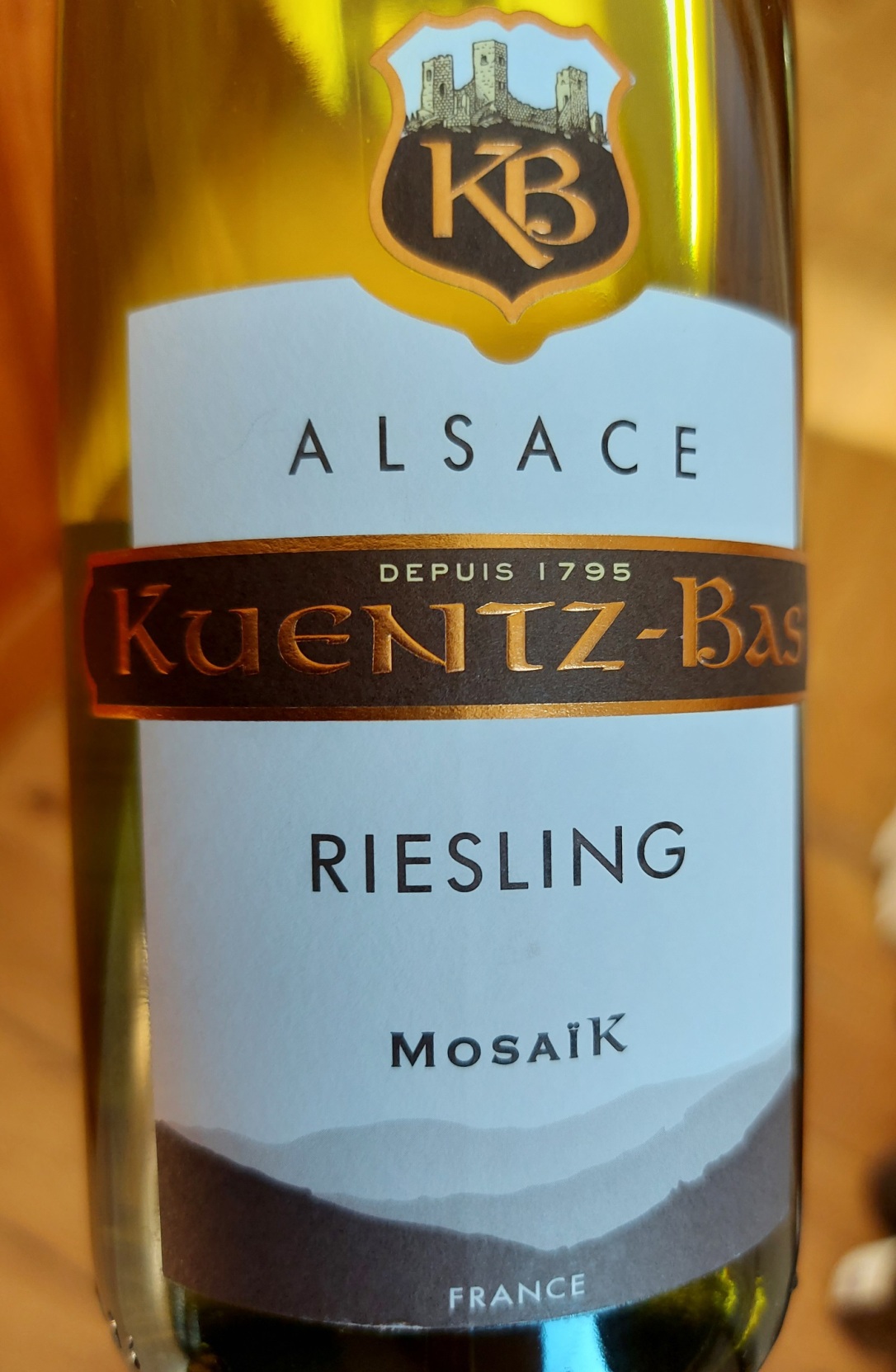
Kuentz-Bas Alsace Riesling MosaïK 2018

Kuentz-Bas Riesling Mosaik 2

MosaïK refers to the multitude of soil types that criss-cross the Alsatian vignoble (13 in total) and specifically the four on which the vines for this wine are grown: marl, clay, limestone and loess. The wine is therefore a Riesling blend.

And it’s unmistakeably a Riesling – pale in the glass then a nose of lemon and lime, golden delicious apples and hints of bitter almonds. It smells like a natural wine – precisely what that smell is lies beyond my vocabulary, but you know it when you smell it. As it’s a step away from the “normal” fruity flavours of young Riesling that might not suit everyone, but for me it adds an interesting extra dimension to the nose.

There’s fruit in the mid palate but the wine is super dry on the finish, which is almost – but not quite – austere. The pithy texture adds more savoury notes to the ensemble. I drank this wine on its own but I think it would shine brighter with food. It’s a great example of a different style of Alsace Riesling.

  • ABV: 13.5%
  • RRP: €16.95, down from €19.95 until 31st August 2022
  • Source: sample
  • Stockists: O’Briens stores and obrienswine.ie